Almost every plan to get ahead with money — paying down debt, investing, saving for a home — quietly assumes that nothing goes wrong. Then the car needs a new transmission, a medical bill arrives, or a job ends, and the whole plan gets charged to a credit card at 20-something percent. An emergency fund is the buffer that keeps one bad week from unraveling months of progress.
The takeaway up front: an emergency fund is a pot of cash, kept somewhere safe and easy to reach, that exists only to cover genuine emergencies without new debt. You do not need a large one to start. You build it by setting a small, concrete starter target, automating steady contributions, keeping the money separate from your everyday spending, and rebuilding it every time you dip in. It is the least glamorous part of a financial plan and, for most people, the most important thing to get right first.
Not financial advice. This is general educational content, not personalized financial, tax, or investment advice, and not a recommendation of any product or account. Every figure below is a simplified, illustrative example, not a prediction or a target for your situation. Consider speaking with a licensed professional about your own circumstances.
What an emergency fund actually is
An emergency fund is money set aside for the unexpected and genuinely necessary — the expenses you cannot plan for but can be almost certain will happen eventually. Its defining feature is not the amount but the job it does: it stands between you and high-interest borrowing when life goes sideways.
That job is worth taking seriously because of how the alternative works. Without a cushion, an ordinary surprise forces you onto a credit card or a loan, and you end up borrowing at a steep rate to fund the very emergencies a few hundred dollars in cash could have covered. The interest then competes with everything else you are trying to do with your money. An emergency fund breaks that cycle before it starts.
It helps to be strict about what counts. A real emergency is unexpected, necessary, and urgent — a job loss, an essential car or home repair, a medical bill, an unplanned trip for a family crisis. A sale on a laptop, a holiday, or a predictable annual bill is none of those things. Predictable costs belong in a budget or a separate savings goal; the emergency fund is reserved for the things you truly cannot see coming.
How much should an emergency fund be?
The figure most often cited is three to six months of essential expenses — not three to six months of income, and not your total spending, but the bare-bones cost of keeping your life running: housing, utilities, food, transport, insurance, minimum debt payments. Everything optional is stripped out, because in a genuine emergency the optional spending is the first thing to pause.
But that full target is a destination, not a starting line, and treating it as the entry price is why so many people never begin. The more useful move is to split the goal in two:
- A starter emergency fund. A small, fixed amount — enough to absorb a common surprise like a modest car repair or an unexpected bill — reached as fast as you reasonably can. Its purpose is to stop small shocks from becoming debt while you work on everything else.
- A fully funded emergency fund. The larger three-to-six-month cushion, built more gradually once higher-priority steps are handled.
Where you land inside that three-to-six-month range depends on how steady your situation is. A dual-income household with stable, salaried jobs and few dependents can lean toward the lower end. A single earner, a commission-based income, self-employment, or anyone others depend on financially usually wants the higher end, because their income is more likely to wobble and takes longer to replace.
Where to keep an emergency fund
The right home for this money is defined by two requirements that both point away from investing it: it must be safe and it must be liquid. Safe means the balance does not fall in value — an emergency is the worst possible moment to discover your cushion dropped 20% along with the market. Liquid means you can reach it within a day or two without penalties or paperwork.
That combination rules out stocks, funds, and anything designed to grow, because growth comes with the very volatility you cannot afford here. It also rules out locking the money away where early access is penalized. A plain, separate savings account — ideally a high-yield one that pays a little interest while keeping your cash safe and reachable — fits the job well.
One deliberate friction helps: keep the fund separate from your everyday checking account. Money that sits next to your daily spending tends to get spent. A distinct account, without a linked debit card, is close enough to reach in a real emergency but far enough that a slow Tuesday does not qualify.
A fair question is whether keeping cash "on the sidelines" is a waste when it could be invested. It is not, and the reason is that this money is doing a different job. Its return is not measured in interest earned but in the high-interest debt you never take on and the investments you never have to sell at a bad moment to cover a surprise. That protection is the point.
How to build it, step by step
A fund you never quite start is worth nothing, so the method matters more than the ambition. A simple, repeatable sequence works for most people:
- Set one concrete starter number. Pick a specific, achievable amount rather than a vague "save more." A clear target you can picture is far easier to hit than an open-ended one.
- Open a separate account for it. Give the money its own home, ideally a high-yield savings account, so it is ring-fenced from daily spending and quietly earns a little.
- Automate a fixed transfer. Schedule an amount to move on payday, before you can spend it. Automating the habit removes the monthly decision — and the willpower it drains. Even a small, consistent transfer compounds into a real cushion faster than you would expect.
- Funnel windfalls in. Tax refunds, bonuses, gifts, or the money freed up when a subscription is cancelled are natural accelerators. Redirecting a chunk of any lump sum shortens the timeline without touching your normal budget.
- Stop at the starter target, then reassess. Once the starter fund is in place, you have breathing room to weigh other priorities — such as high-interest debt or an employer retirement match — before returning to top the fund up to its full size.
Finding the transfer amount is a budgeting exercise, not a mystery. The gap between what you earn and what you must spend is the raw material; even trimming a few recurring costs frees up a steady contribution. If you are weighing this against other demands on the same dollar, our guide on whether to pay off debt or invest first lays out where a starter emergency fund usually sits in the order.
When to use it — and how to rebuild
A fund you are too afraid to touch is not serving its purpose. Use it when a genuine emergency hits — that is exactly what it is for, and spending it in a real crisis is a success, not a failure. Draining it to avoid a credit card at 22% is the fund doing its job perfectly.
The discipline is on the two edges. First, be honest about what qualifies: run any expense through the "unexpected, necessary, urgent" test before you tap the fund, so a want never gets dressed up as a need. Second, rebuilding is not optional. The moment you spend from the fund, refilling it becomes the temporary top priority, ahead of extra investing or discretionary spending, until the buffer is whole again. A cushion you use once and never restore leaves you exposed to the next surprise.
Where the emergency fund fits in the bigger plan
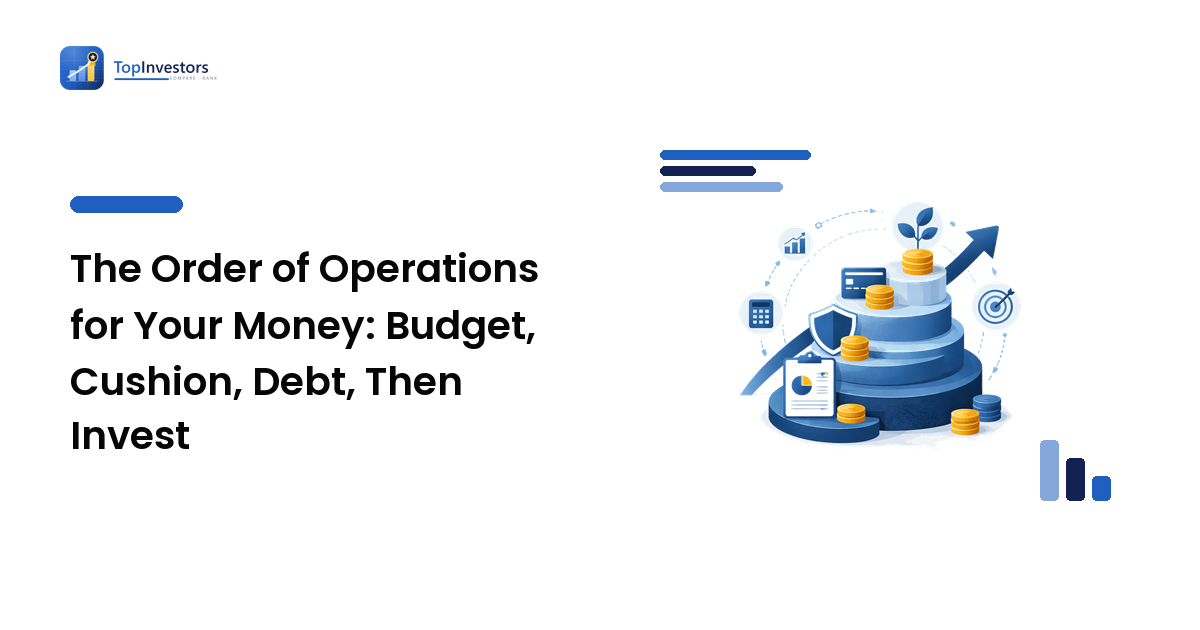
An emergency fund is the foundation the rest of a financial plan is built on, which is why it usually comes first. Investing before you have any cash buffer is fragile: the first unexpected expense can force you to sell investments at the worst possible time, or push you into the high-interest debt that investing is supposed to help you escape. The buffer is what lets you stay invested through rough patches instead of being shaken out of them.
That is also why the emergency fund is not itself an investment and should not try to be. It trades growth for certainty on purpose. Once it is in place, the money you were funneling into it can graduate to goals where growth is the aim — and if that next stage is new to you, our investing basics guide covers how stocks, bonds, and funds actually work. Get the safety net right first, and everything you build on top of it stands on firmer ground.
FAQ
How much should I have in my emergency fund?
A common guideline is three to six months of essential expenses — housing, food, utilities, transport, insurance, and minimum debt payments — not three to six months of income. Start with a smaller, fixed starter amount that covers an ordinary surprise, then build toward the fuller cushion over time. Lean toward six months if your income is variable or you are a single earner, and toward three if you have stable, multiple incomes.
Where should I keep my emergency fund?
Somewhere safe and quick to access — the balance should not fall in value, and you should be able to reach it within a day or two without penalties. A separate high-yield savings account is a common fit: it keeps the cash liquid, pays a little interest, and stays walled off from everyday spending. Investments and anything with early-withdrawal penalties are poor homes because they can drop in value or lock the money away.
Should I build an emergency fund or pay off debt first?
Most frameworks suggest a small starter emergency fund before attacking debt aggressively, because without any cushion the next surprise pushes you straight back onto high-interest borrowing. Once the starter buffer exists, high-interest debt usually takes priority over building the fund out further. Our guide on whether to pay off debt or invest first walks through the full order of operations.
Is an emergency fund the same as regular savings?
Not quite. A general savings account might hold money for planned goals — a holiday, a car, a down payment. An emergency fund is reserved strictly for the unexpected and necessary, and keeping it separate makes it less tempting to spend on things you can actually plan for. Same type of account, different job.
What if I have to use my emergency fund?
That is what it is for — using it in a genuine emergency is a success, not a setback. The one rule is to rebuild it afterward. As soon as you have dipped in, refilling the fund becomes the temporary top priority, ahead of extra investing or discretionary spending, until the buffer is back to full.
Next step
An emergency fund turns "what if something goes wrong" from a source of anxiety into a solved problem. Pick one concrete starter number, open a separate account, and automate a transfer on payday so the habit runs without you — then let windfalls speed it up. Once the buffer is in place, protect it, use it only for real emergencies, and rebuild it every time. With that foundation set, the rest of your money can start working toward growth. Keep learning with plain-language guides at toppinvestors.com.